Alder Alley
We hired the arborist to come look at the bluff.
That was the brief. Inspect the trees on the edge, identify the ones at risk of falling on a future structure, limb up the canopy carefully so we could open the view without losing the screen of green that gives the property its character. Protect the salal - that's the plant doing the actual work of holding the cliff together. Keep the trees that should be kept. Take down the ones that shouldn't.
We met him on a February morning. He walked the bluff slowly, the way someone walks who has spent decades looking at trees and knows what to look for. He pointed at one fir, called it dangerous. He pointed at another, called it fine for another fifty years. He showed us where to limb to gain a sliver of view without exposing the cliff to wind. He inspected. He marked. He gave us his honest read.
And then, somewhere near the end of the bluff, Alex pointed at two trees standing close together at the southwest edge of the property — a spruce and a hemlock — and asked the question he had been holding all morning.
Could those two work for a treehouse?
The arborist tilted his head back. He looked. He walked around them. He looked again. We could see him doing the math - root health, lean angle, the geometry of two trunks holding a future platform. Then he turned to us and confirmed it. They were perfect. The best seats in the house, he called them.
That was the first surprise of the morning.
We were nearly done. He was packing up. I asked him, almost as an afterthought, if he'd be willing to walk into the wooded part of the property with me - the part we hadn't really explored yet, the part that had been mostly inaccessible since the day we bought it. I wanted to know if a trail could go through.
He brightened. Of course.
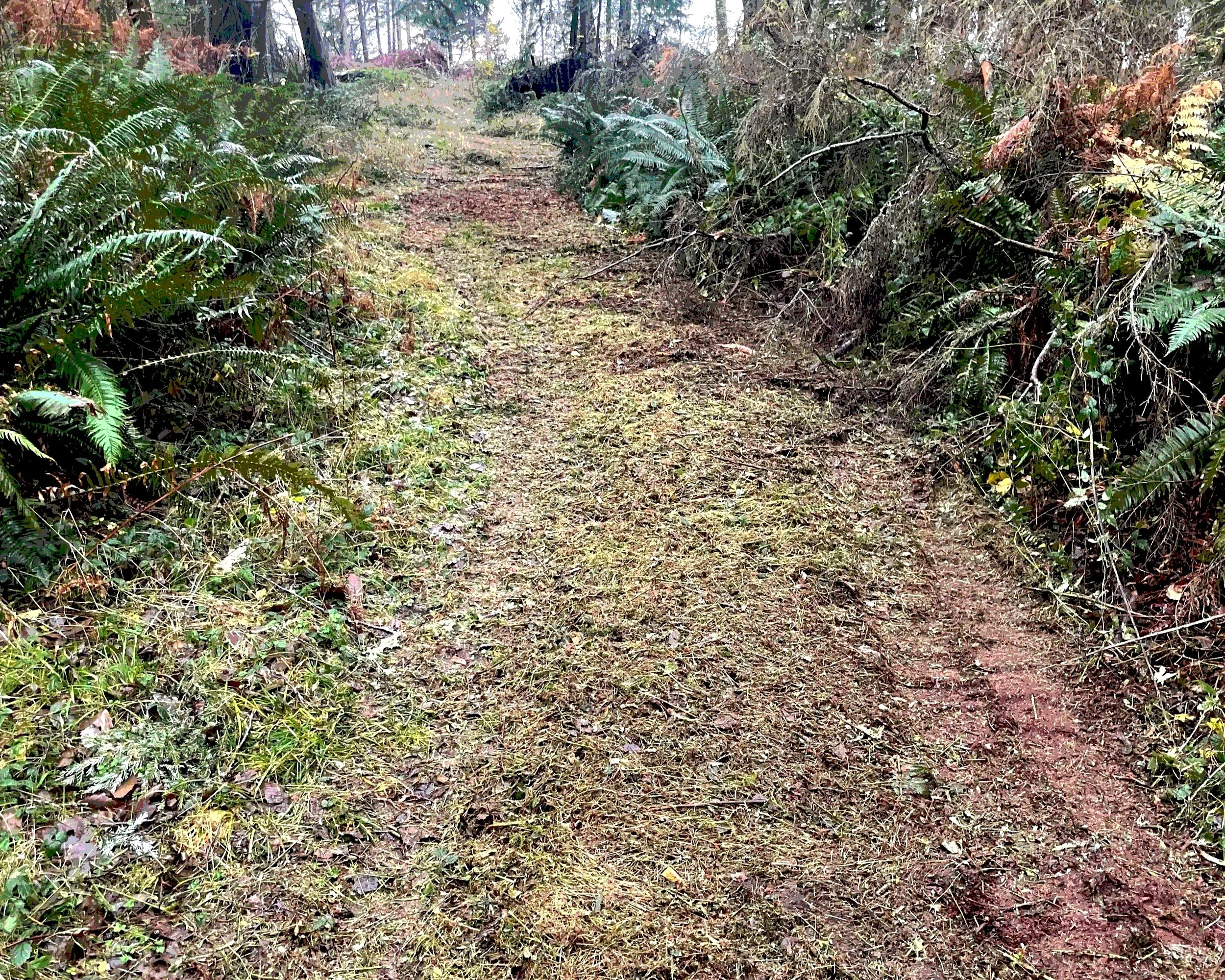
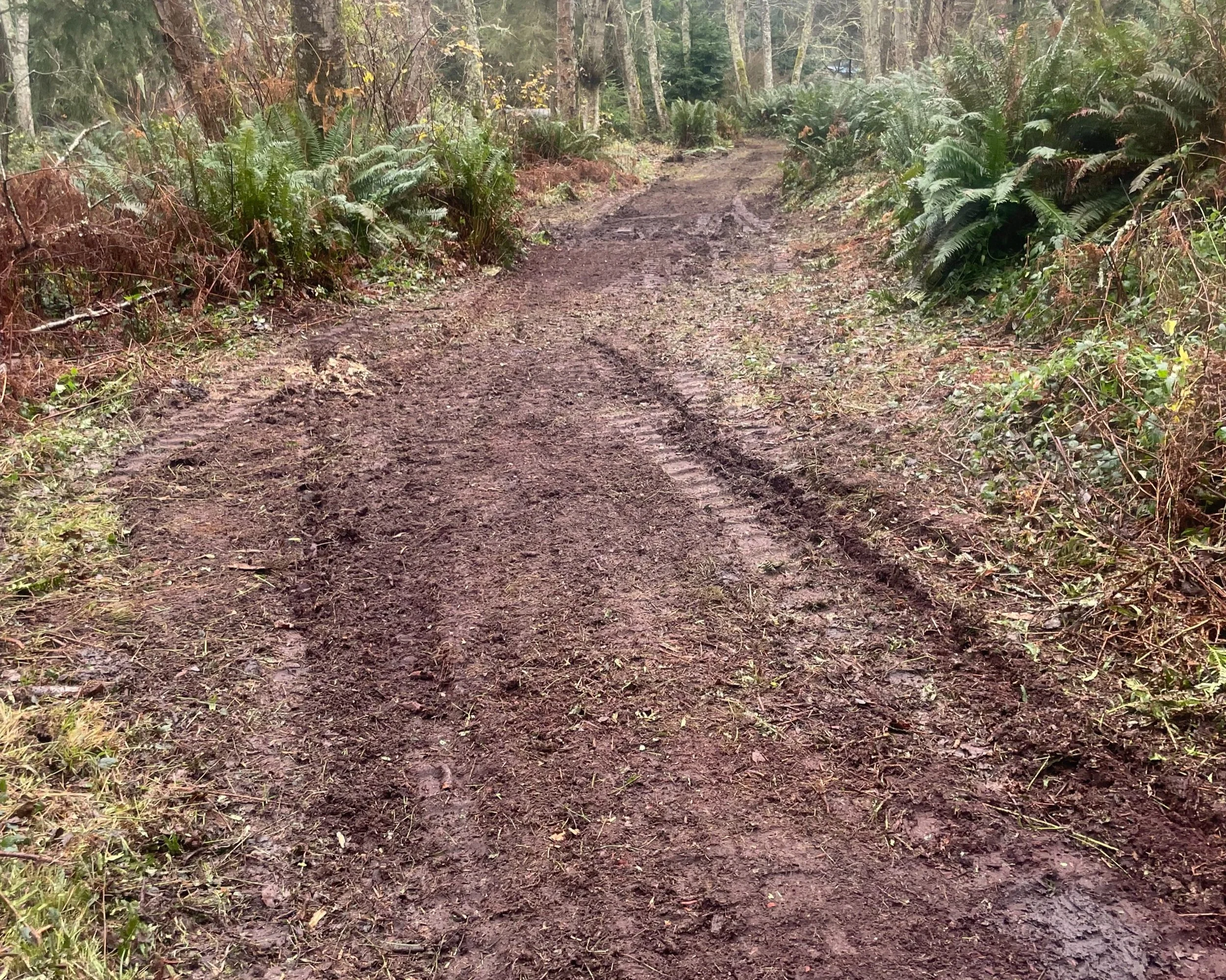
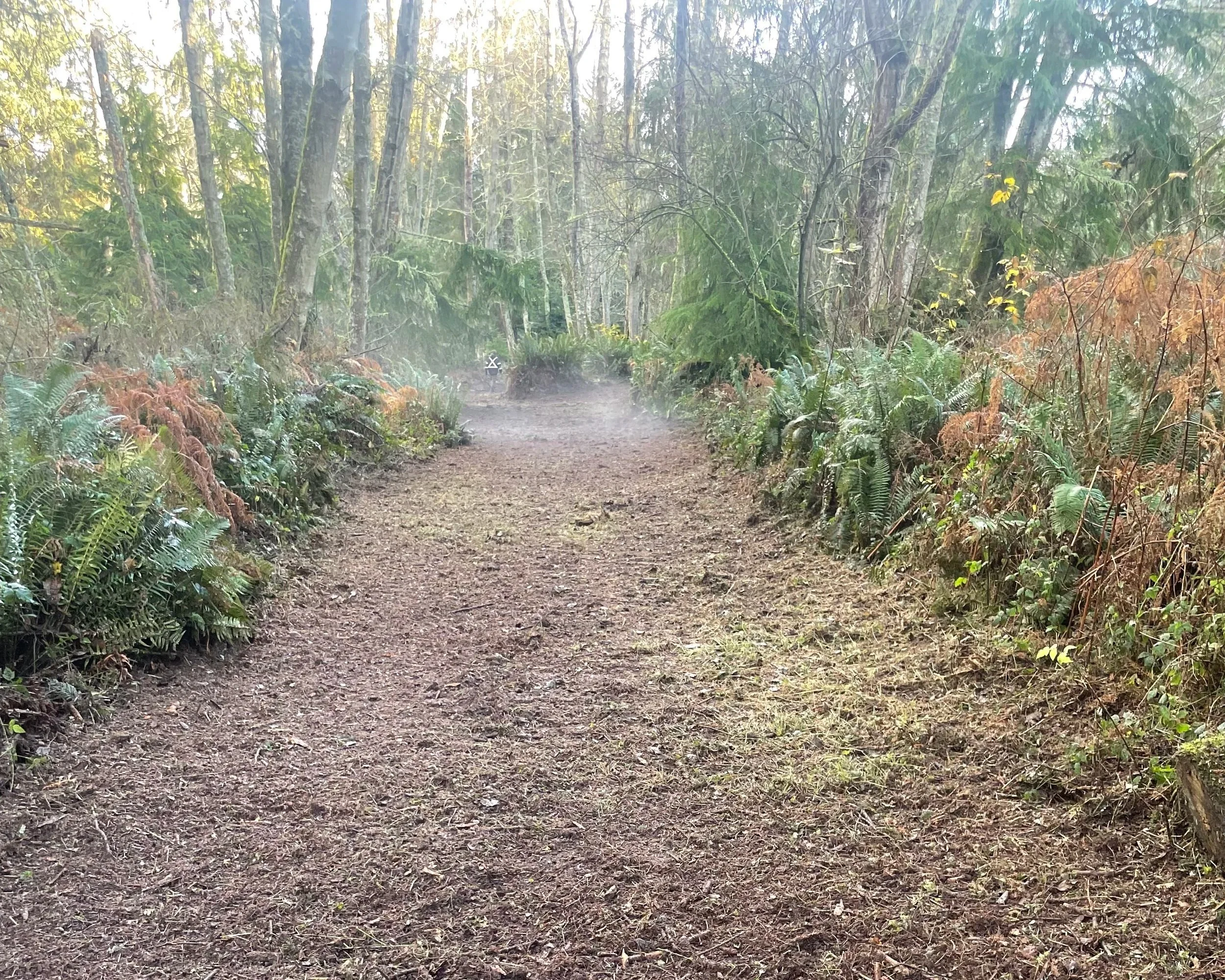
The walk took thirty minutes, maybe forty-five. We pushed through brush, climbed over deadfall, ducked under low branches. The further we went, the more the property opened up. There was a natural corridor running east-to-west, almost a path already, lined on both sides with rows of alders standing like a colonnade. Beyond that, a clearing wide enough to hold tents. Beyond that, another opening - softer, ringed with conifers, the kind of space that invites you to sit down. And beyond that, the bluff again, approached from a direction we hadn't known was possible.
The arborist was as excited as we were. He started offering things. I could clear that pathway for you. I could open up these two spots over here for campsites. I could get this all done in a day if you want.
We said sure.
The naming came later, but only barely. The corridor of alders became Alder Alley, because what else could you call it. The first clearing became the campsite - eventually it will become a glamping area, once we got serious about the tent. The second clearing, the softer one with the ring of conifers, we call the Chapel, because it has the geometry of a place where our friends and family will congregate, even though we don't intend to do anything particularly holy there. Campfires. Songs. The occasional bottle of wine. Less liturgy, more singing!
Somewhere in there, we also picked the spot for an eventual disc golf course - because the property had room for one.
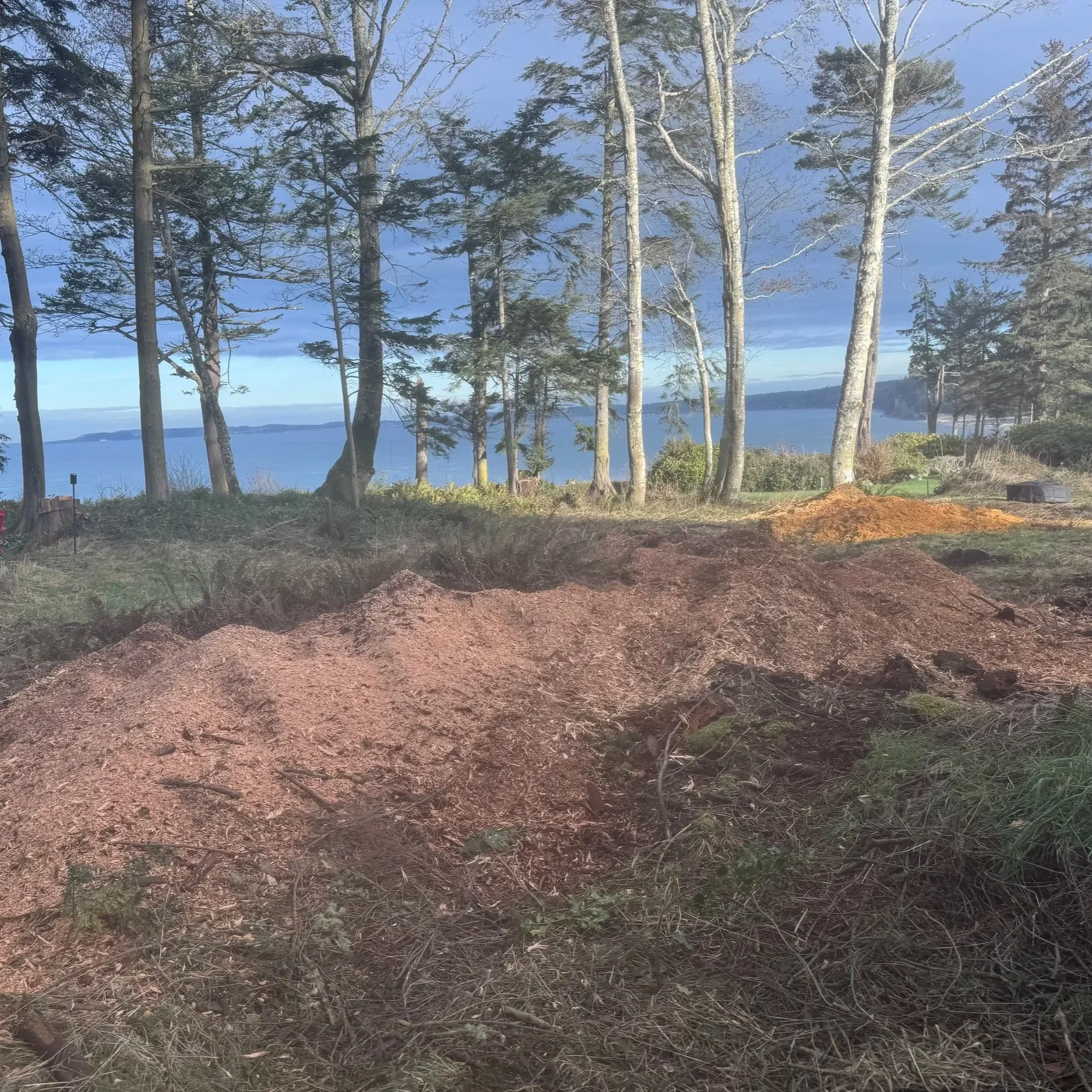
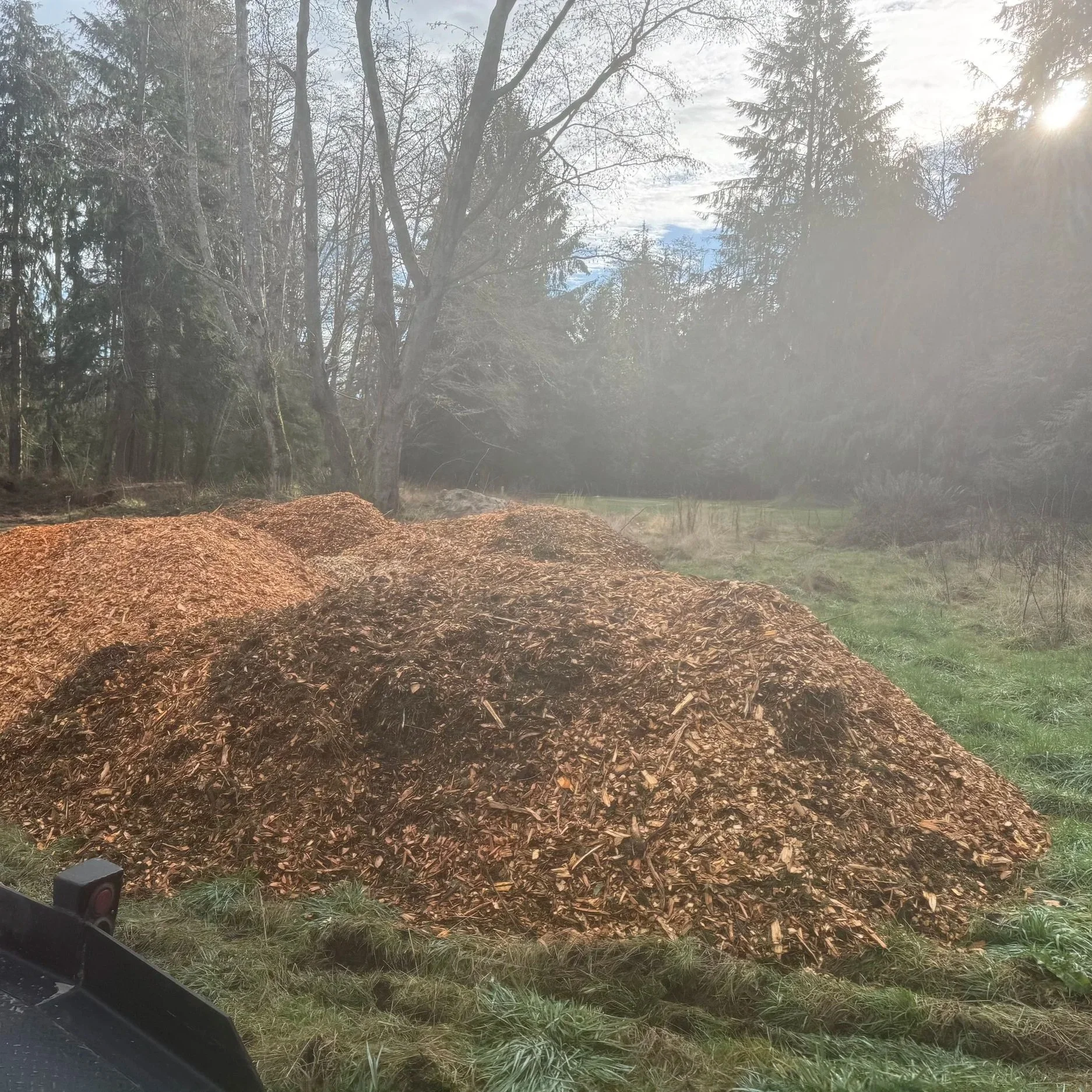
The arborist came back the following week with a skid steer and a crew. In a single day they cleared the at-risk trees, limbed the bluff to spec, broke a trail through Alder Alley, opened the campsite clearings, and - at the end of the same day - sorted the inherited log deck into piles for milling and chipping.
By dusk, we had a property we could walk all the way through.
We had bought five acres in November. In February, on a thirty-minute walk that we almost didn't take, we discovered we owned more rooms than we had thought. The bluff. The treehouse trees. Alder Alley. The campsite. The Chapel. A future fairway.
Same five acres. Same day.
Sometimes the land has been waiting longer than you have.