
The Garden
We did not plan a garden. We planned a place.
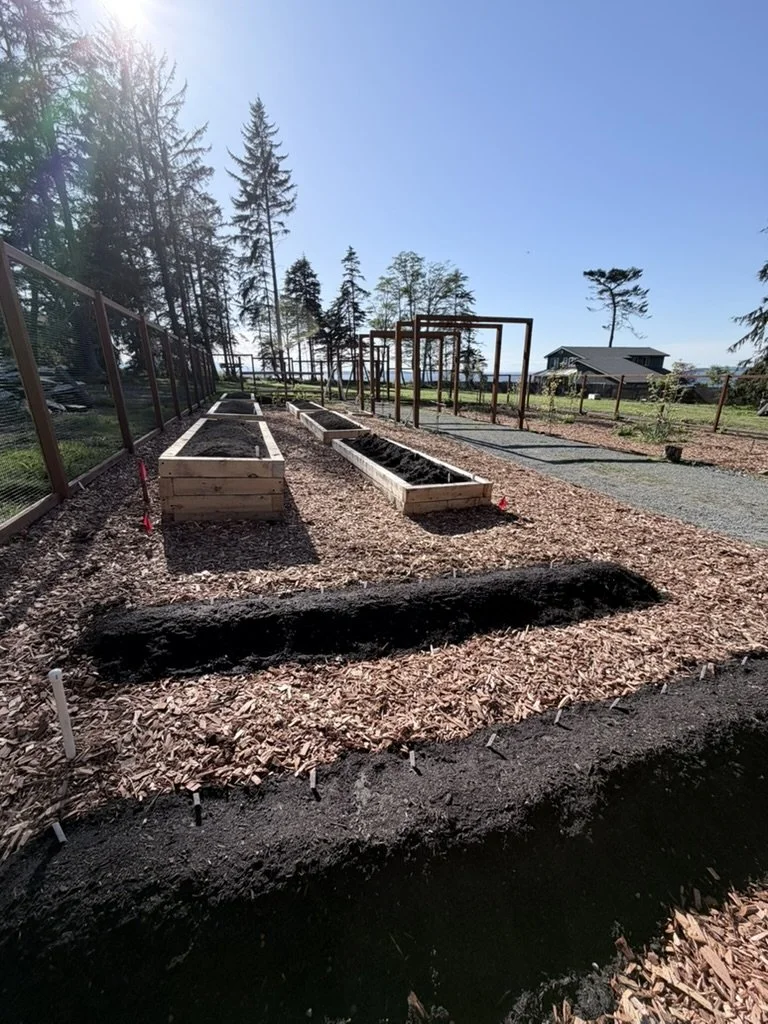
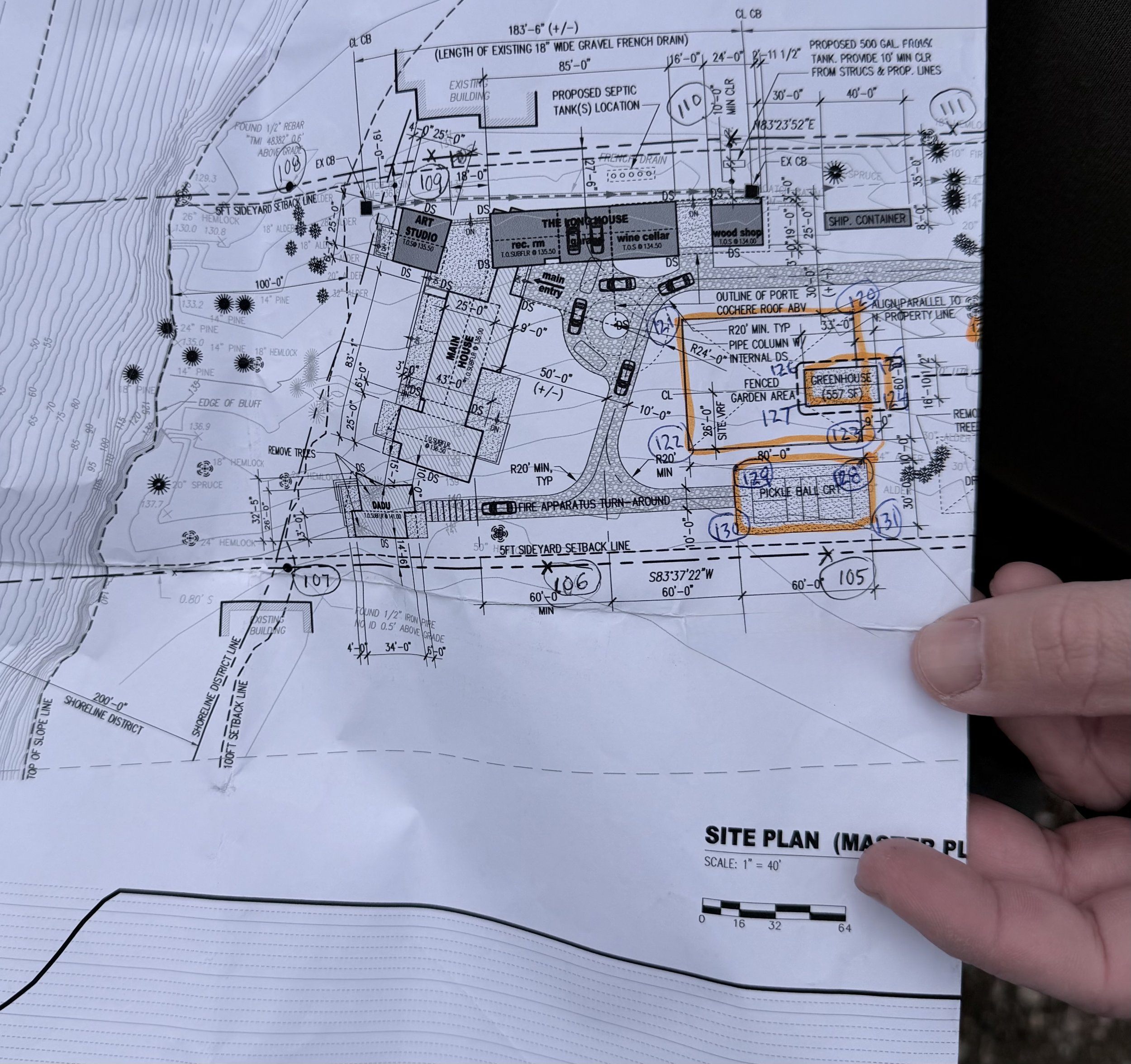
The garden at Greyhaven sits in the center of the property, south of where the Longhouse will eventually stand. It’s the clearing the driveway curves toward as it makes its way in from the campsite - the space that anchors the entire property. A central feature and place to gather.
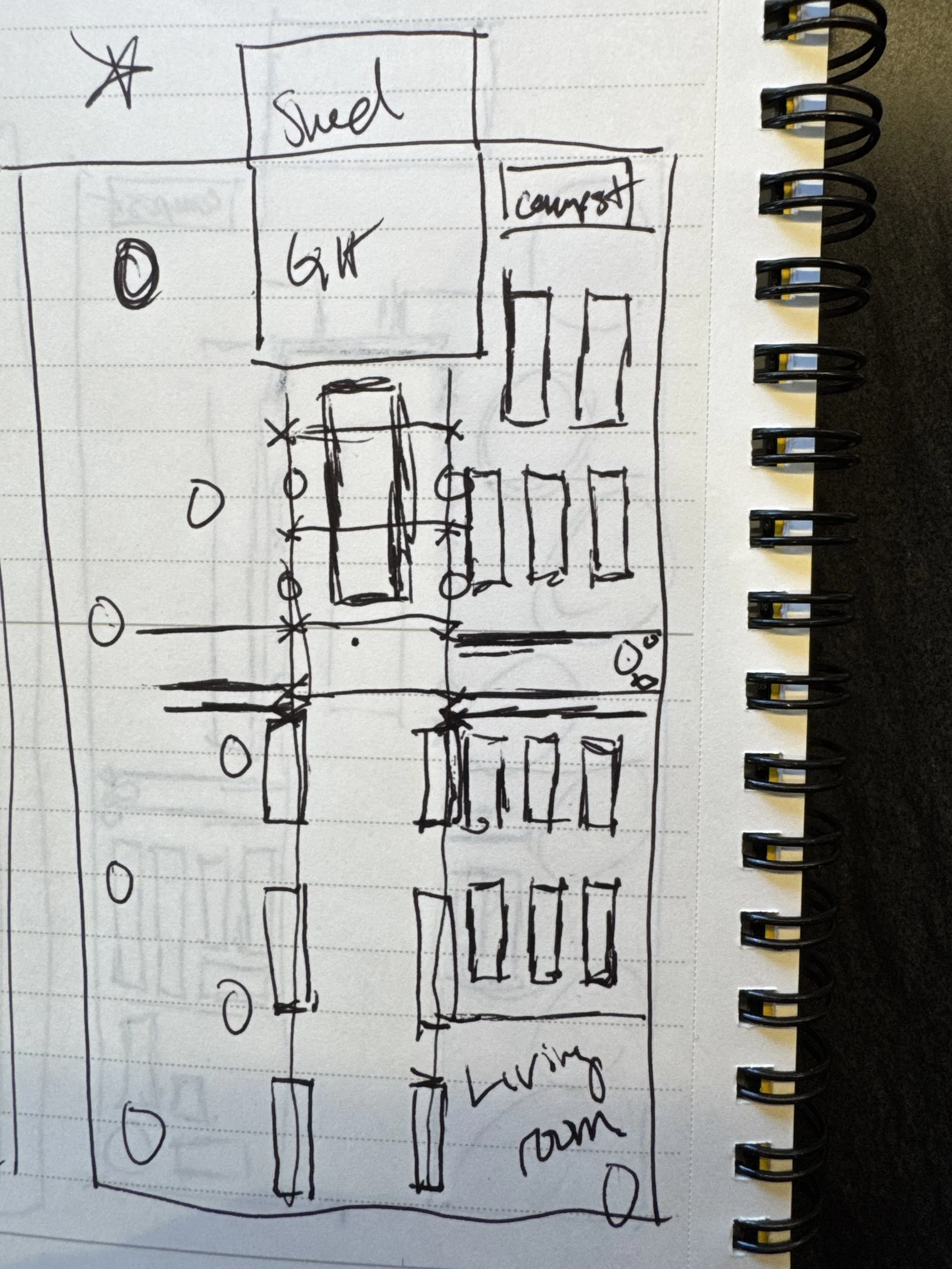
It is sixty‑four feet wide and ninety-six feet long. There’s a seven‑foot tall fence designed with a rabbit barrier a foot beneath. There is a grand entrance with two gates from the west and a subtle and more secret way to enter from the east. A path runs down the middle, wide enough for a long table and chairs. At the far end, there’s a sunken area where we imagine sitting by a fire, glasses of wine in hand, while a hedge of blueberries grows up around us.
One day, a greenhouse with an attached shed will anchor the east end of the space. For now, it exists only on paper.
Looking back, we realize this is the largest single project we’ve taken on at Greyhaven - and we’re building it in pieces.
The drawing came first. Long before anything went into the ground, we thought about the garden as an outdoor room. Edges. Center. Flow. Orchard. Beds for vegetables. A place for flowers. A perimeter that could hold its own against a tall fence. Somewhere to sit. Somewhere to gather.
The path down the middle was non‑negotiable. It had to be wide enough for a long table. A table to fill with friends and family in the very location everything was harvested was a must.
The greenhouse and shed are waiting on a permit we expect to clear in July. Until then, we’ve been building everything else.
Act One: The Orchard
We planted nine fruit trees in the fall of 2025 - six months before we had a permanent fence.
This wasn’t how we intended to sequence things. The advice is usually fence first, then plant. But we wanted the trees in the ground early enough to establish, and we knew the fence would take time. We decided to plant anyway, surrounding them with a temporary fence of 4×4s and welded wire - ugly, functional, and just strong enough to keep the deer out through winter.
We planted dwarf and semi‑dwarf varieties so the harvest would stay reachable. Two rows, spaced nine feet apart, oriented to the light.
And because orchards aren’t just trees, we planted everything that helps them thrive.
Comfrey for its deep taproot and generous leaves. Daffodils, crocus, and alliums in loose rings around each trunk to deter pests. Bee balm and yarrow scattered through the rows, for the pollinators we’ll need when the trees flower.
Around each tree’s drip line, a small community began to form - a guild, in permaculture terms. A quiet system where every plant has a role.
We worried about the deer all winter. We checked the trees often. The temporary fence held. The trees held. When the permanent fence finally went up in March, all nine were still standing and flowers were coming in.
Act Two: The Beds
The fence went in in March. The beds followed in April.
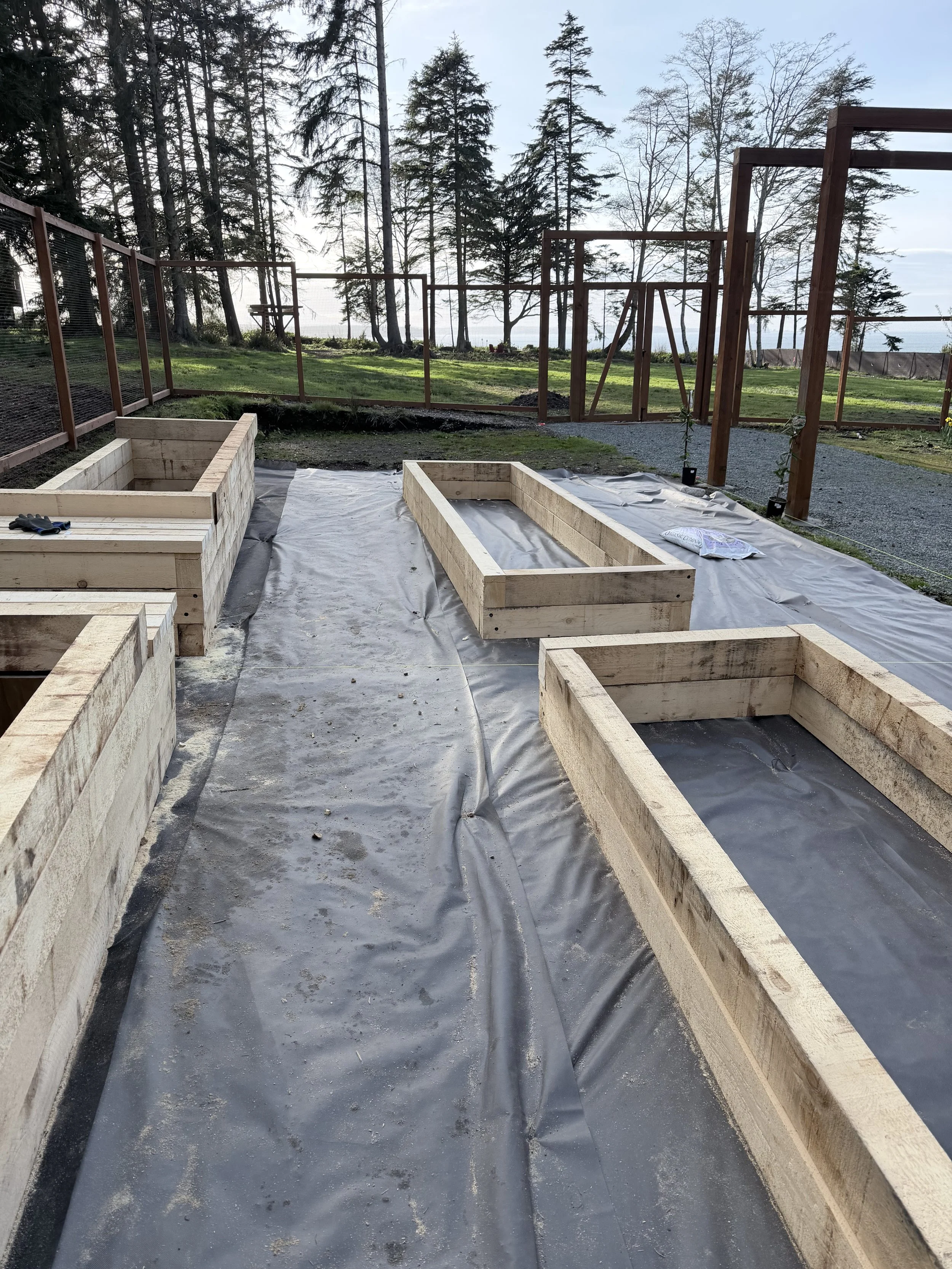
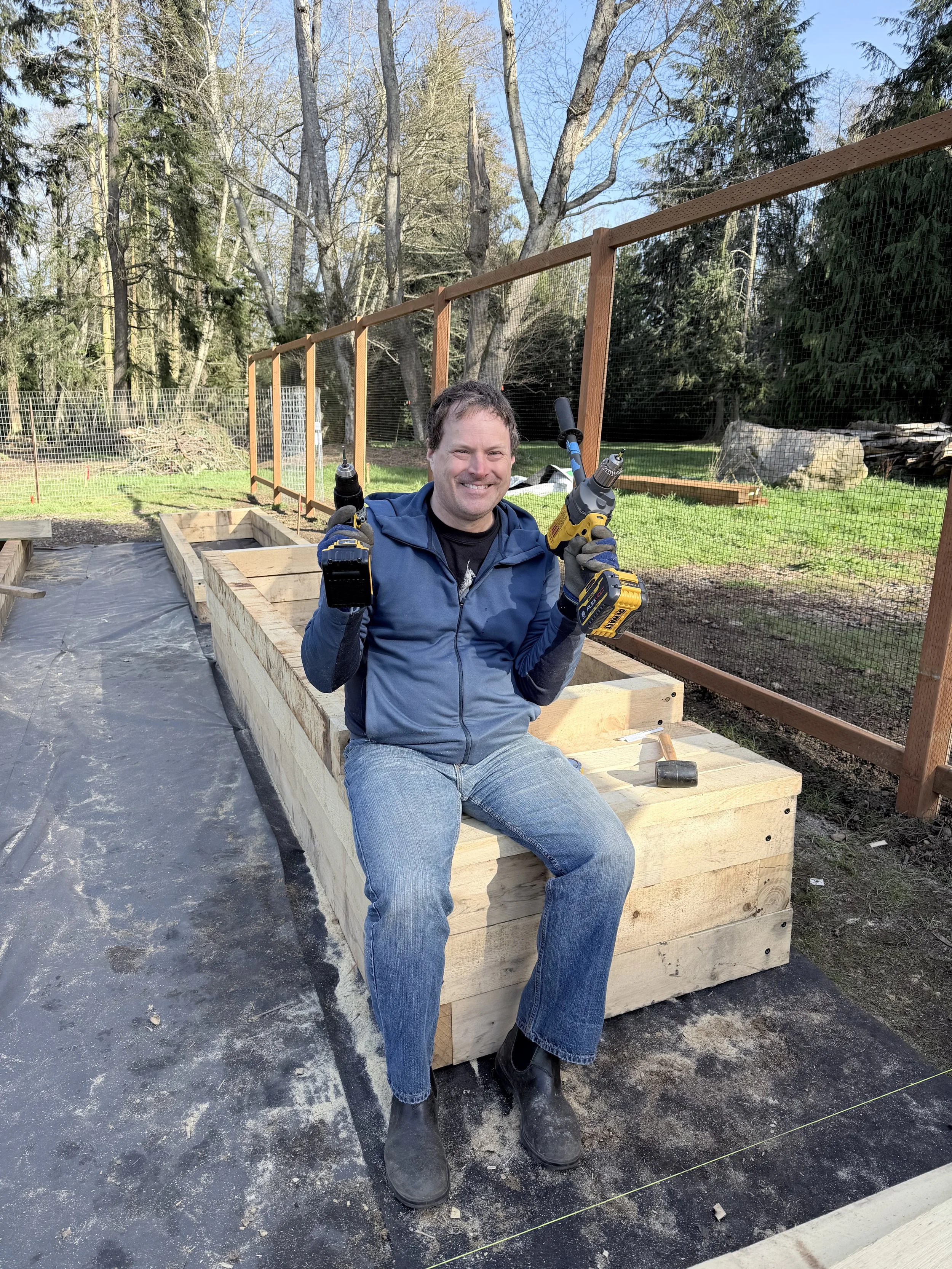
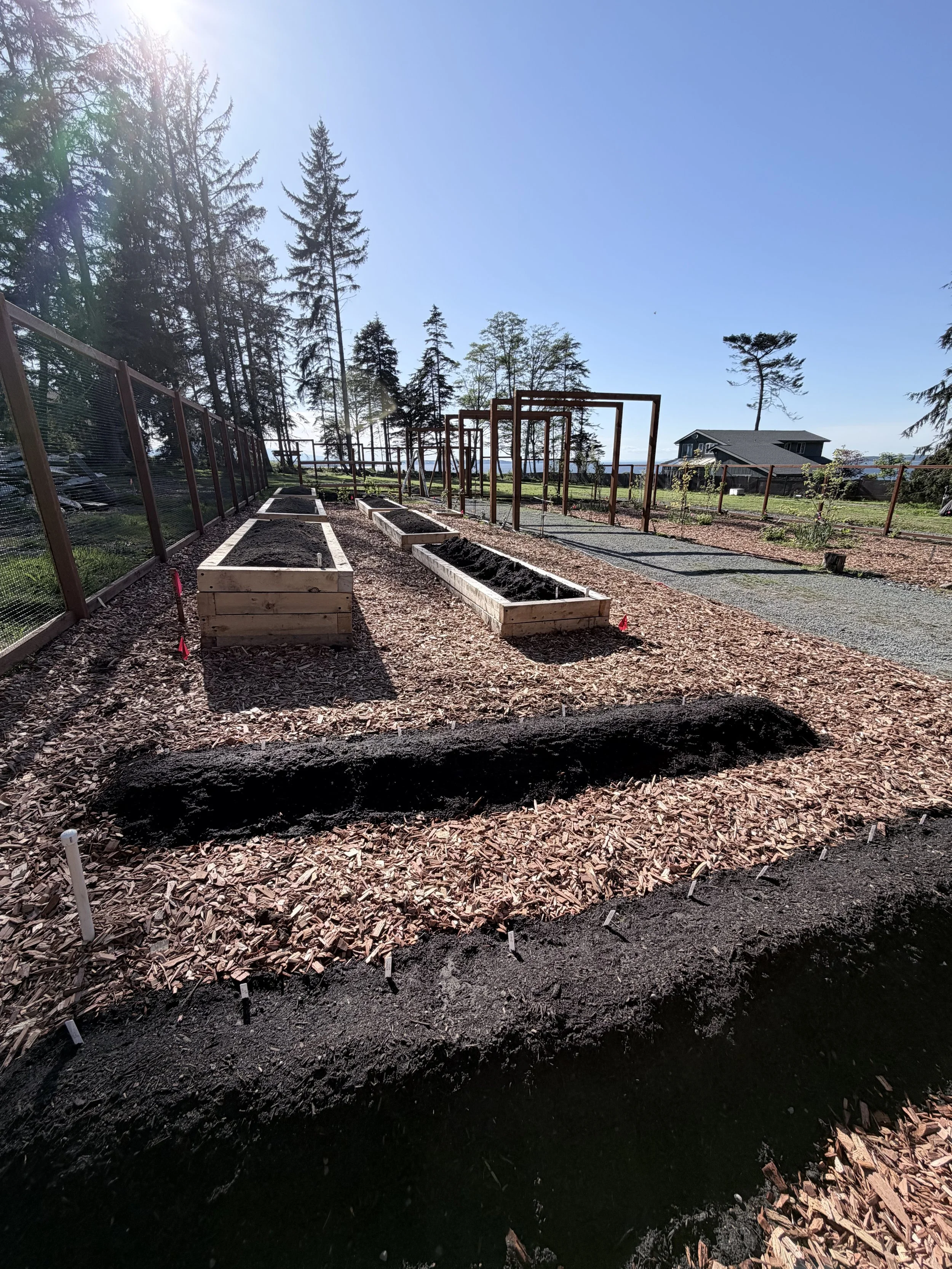
We ordered Green Alaskan Yellow Cedar and built them ourselves - mostly Alex and me, with our daughter helping when she could. Six beds are finished. Four more will come later.
Three of the beds are tall, about three feet. We added benches on two into the short sides of two. That was a practical choice - aging knees, but also a reflection of how we like to enjoy the garden: small moments, in different spots, taking it all in. Three beds are taller and three beds are medium. Creating practical space for planting and harvesting and visual interest. The remaining beds will be low.
We built everything over three weekends. The cedar smelled incredible the entire time. The benches added an extra Saturday. Nothing went up backwards. We’d learned a few things by then.
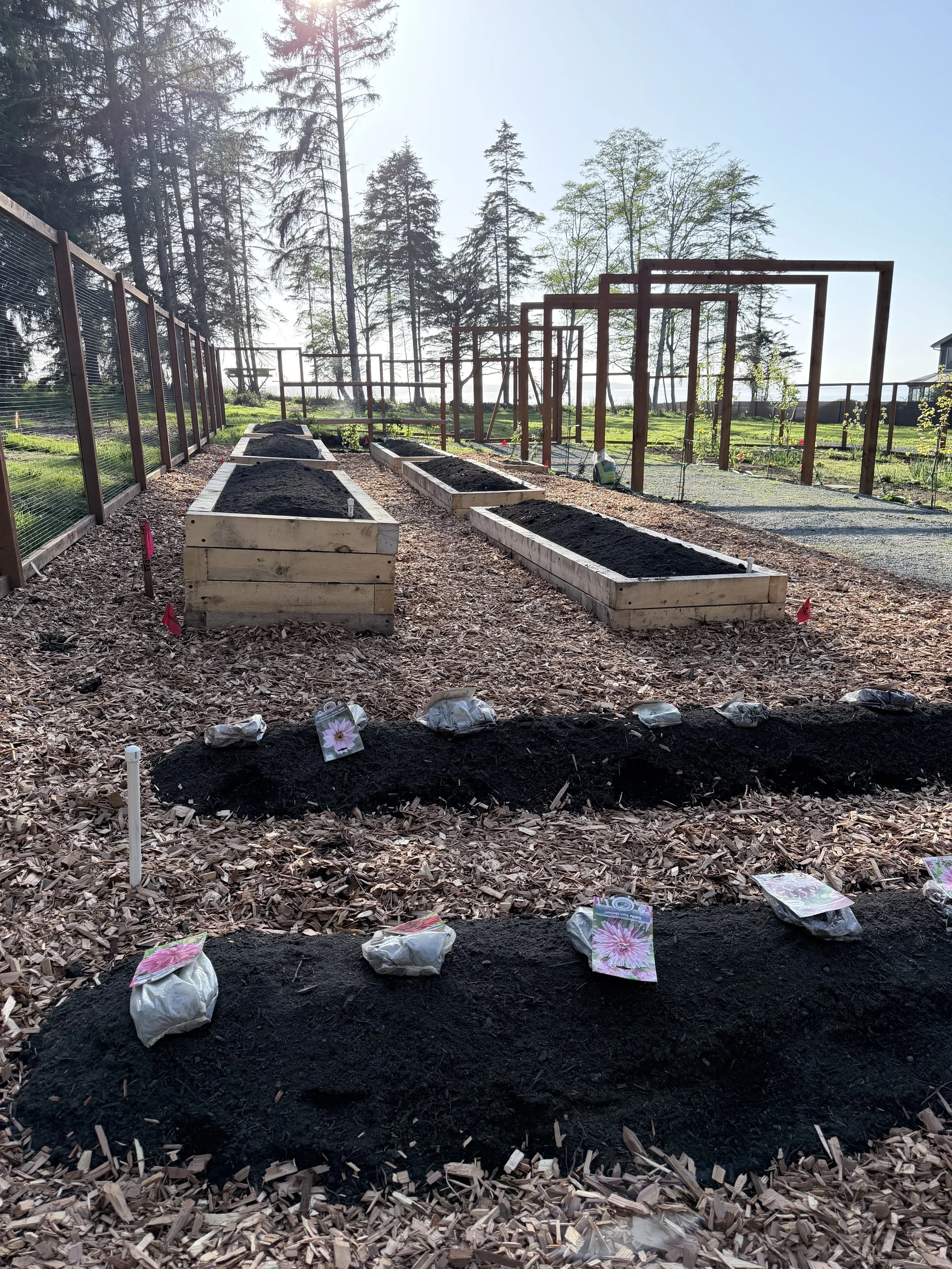
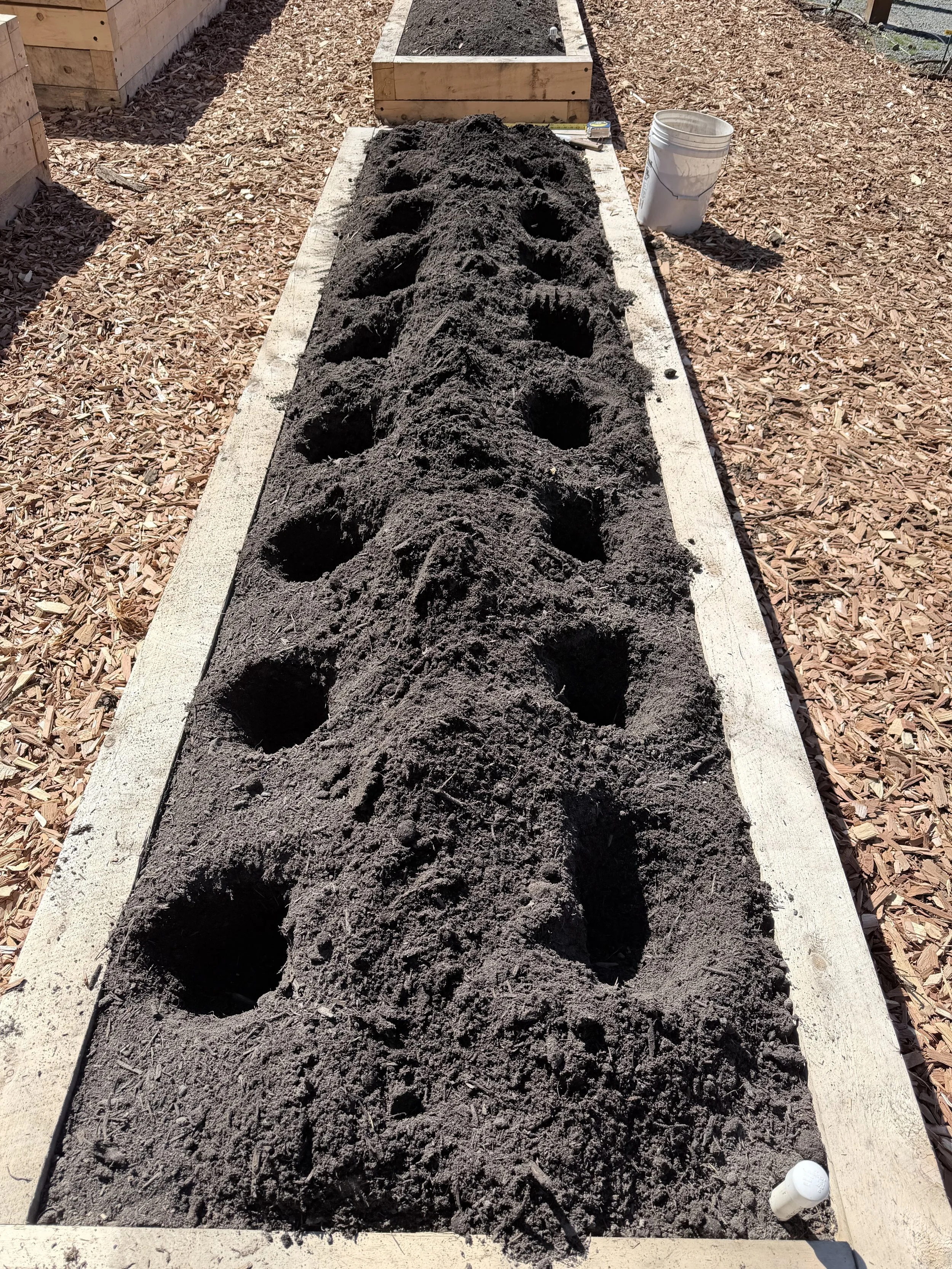
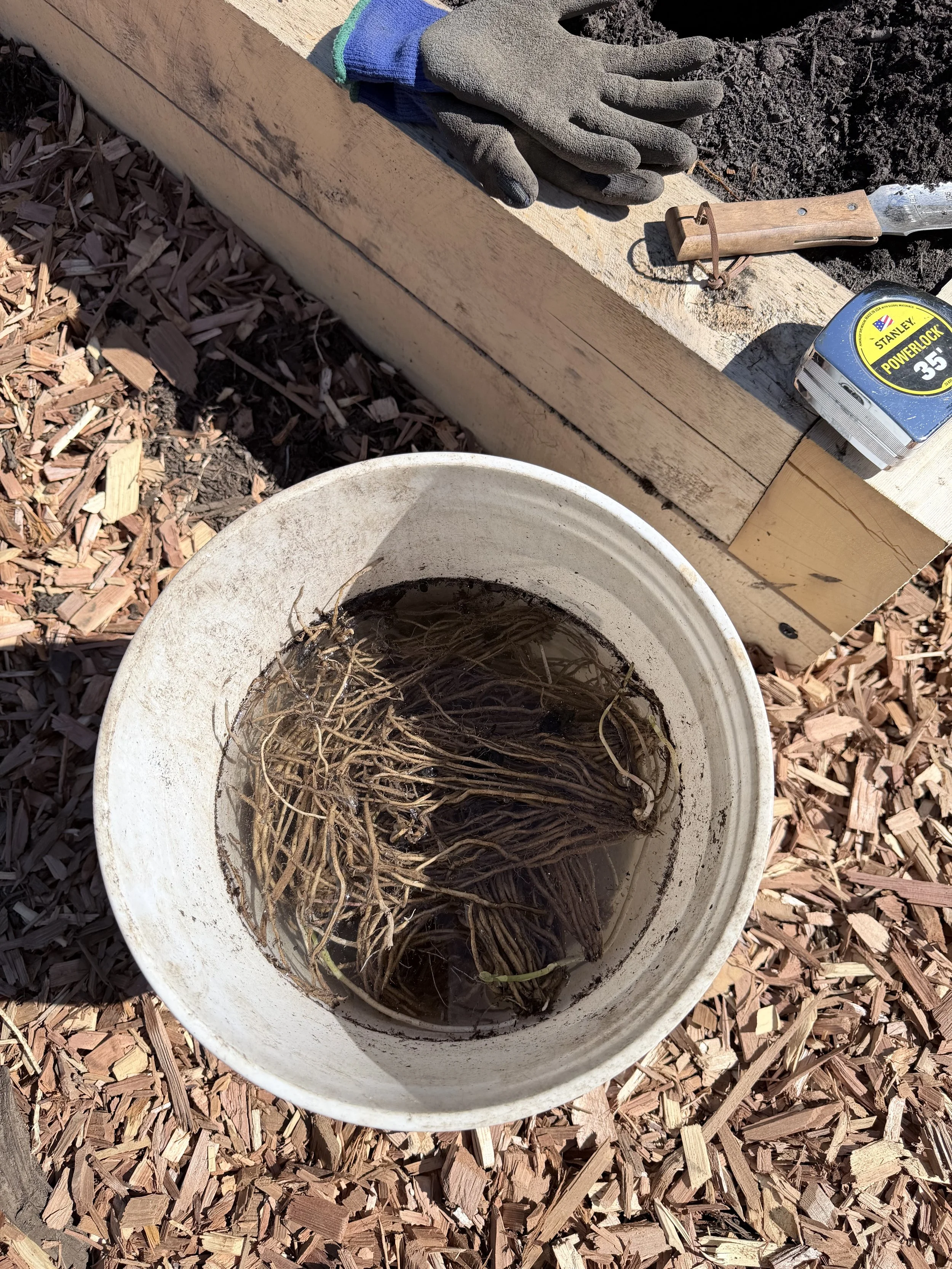
We planted a bed of dahlias - two twelve foot rows. A small admission - we’ve never grown cut flowers before. Starting with dahlias felt like the right choice. They’re generous and bold, and they’ll give us something to bring inside later in the summer, when the vegetables are winding down.
Along the inside of the fence, we planted perennials: foxgloves, black‑eyed Susans, poppies, echinacea, and artichokes. The artichokes were chosen mostly for their foliage. A seven‑foot fence needs weight, and perimeter plantings either overwhelm or disappear. The artichokes do neither.
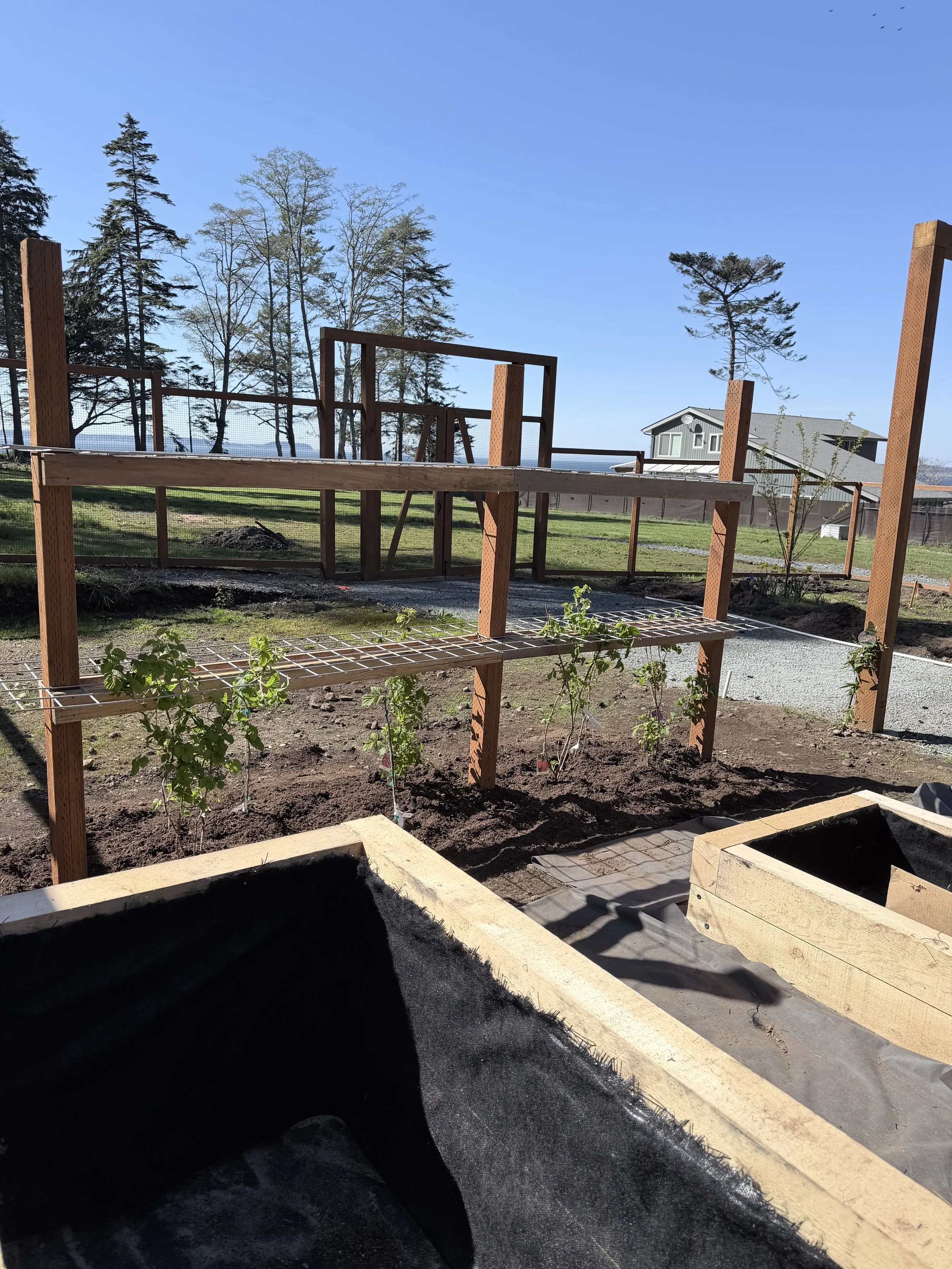
While the beds were going in, we built the raspberry trellis. Three cedar posts spaced six feet apart, braced with horizontal boards and topped with galvanized hog fencing. Every piece came from somewhere else on the property - offcuts from the tent platform, the treehouse, the outhouse. The trellis is made of the literal remains of earlier work.
The compost system followed the same logic. Three large bins, built from the same offcuts, designed with the expectation that we’ll be feeding this garden for a long time. The front slats are still a work in progress. Everything else is already in use.
Nothing wasted that didn’t have to be.
Act Three: The Spring
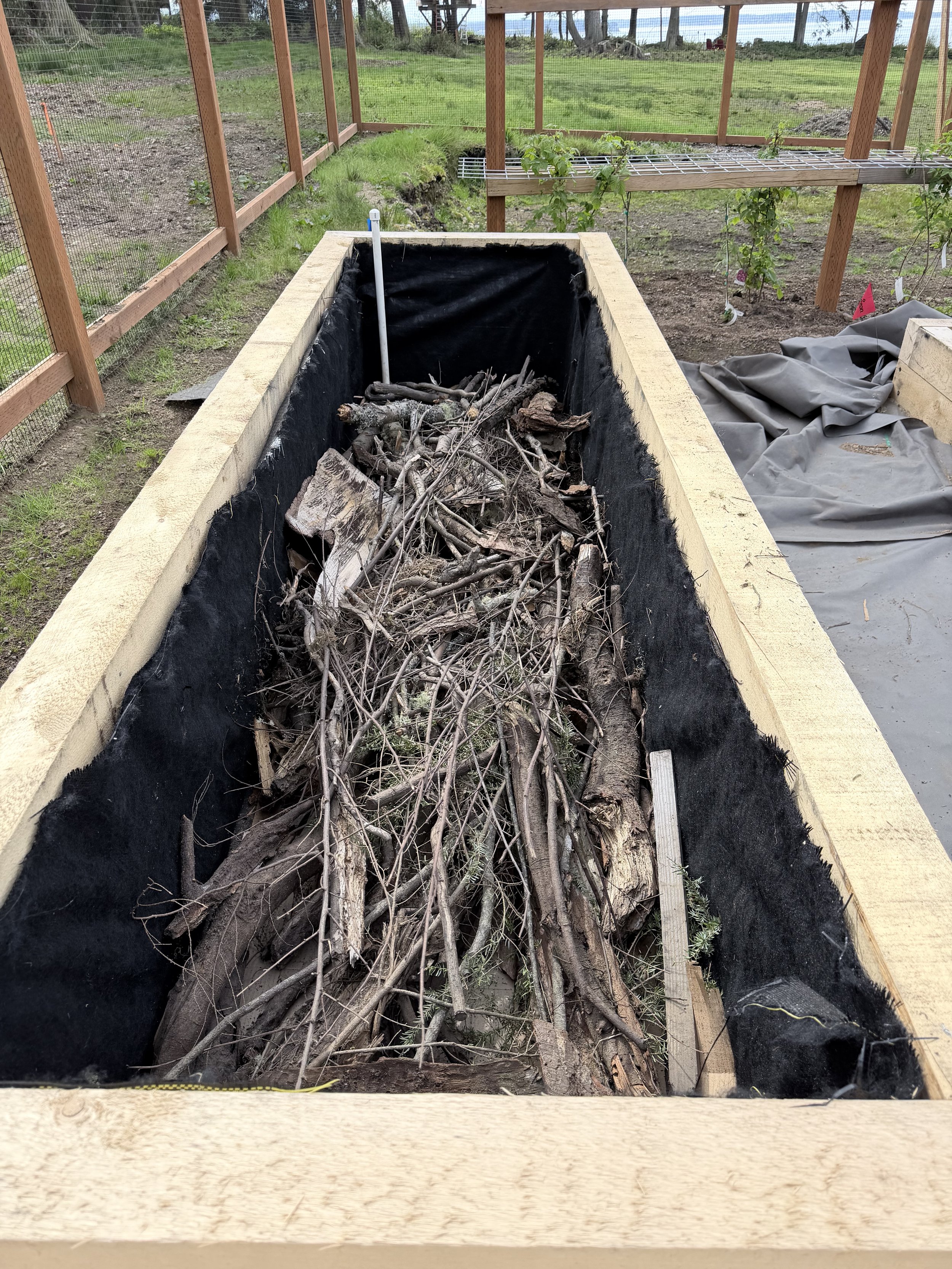
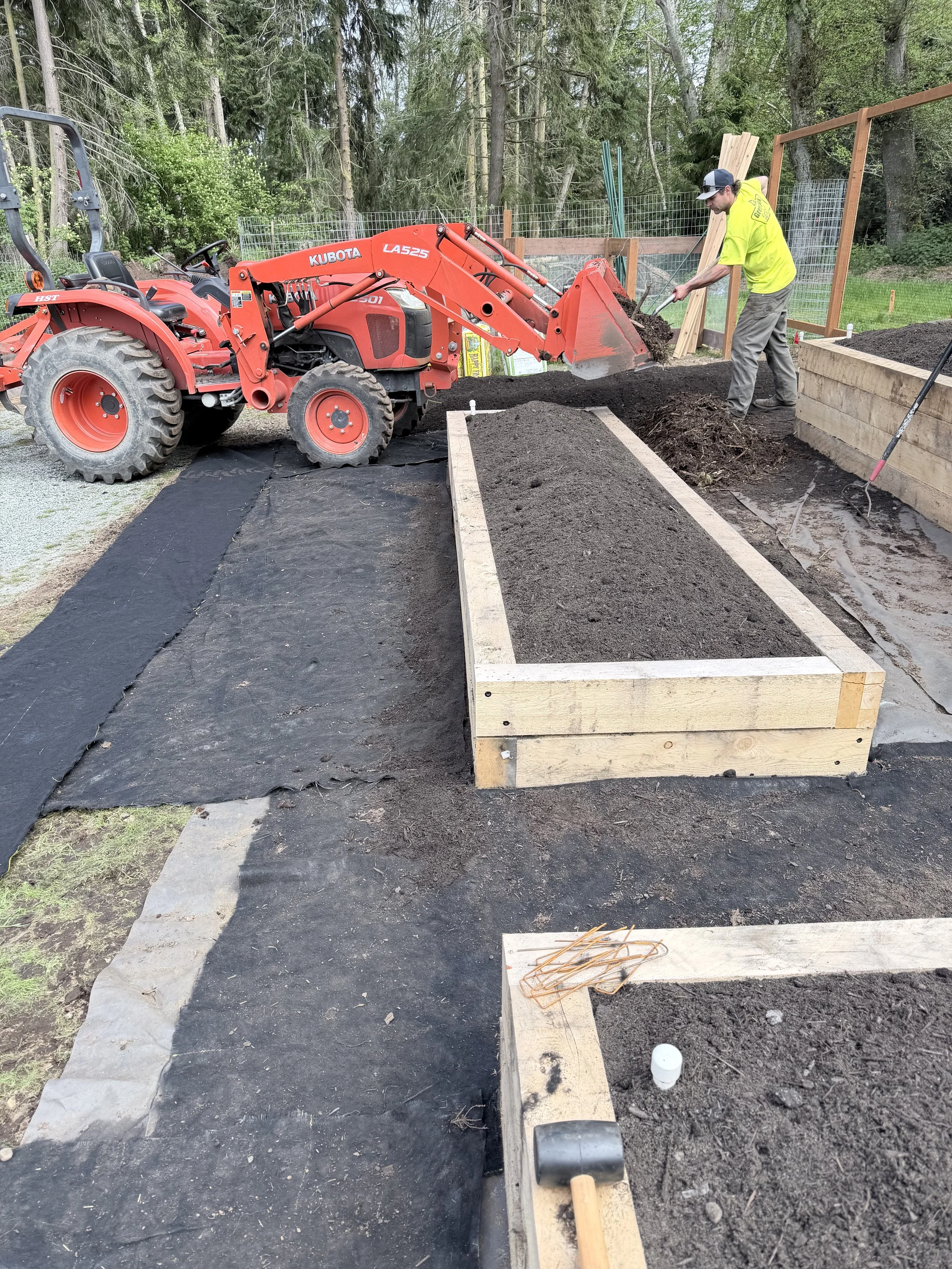
In late April, we filled the beds. Every bed lined with landscape fabric to protect the wood and extend its life. The floor of each bed covered with cardboard. The taller beds filled with branches from this past years windstorms and native soil from around the property.
Two long days of shoveling compost and soil. Hog fuel spread across the orchard floor and around the raised bed area, topped with cedar chips to hold moisture, suppress weeds, and release that forest smell every time it rains.
The trees finally had their permanent fence and their full understory. The beds were ready. The trellis waited for fruit. The compost began its quiet work.
When we stepped back at the end of April - trees established, beds built, perennials coming up - we realized the outdoor room was finally taking shape.
Walls of fence.
A ceiling of sky.
A path down the middle, like a hallway.
Veggies in May. The greenhouse permit should come through in July. The sunken living room and retaining wall are next. The blueberry hedge goes in the ground. There are four more beds to build, a long table to place down the center path, and all the small decisions that turn a garden into a place where time is spent.
Build Notes
A practical appendix for anyone trying to do the same thing.
Footprint
64′ × 96′
7‑foot perimeter fence with two gates
12′ main entry
Secondary entry through the future greenhouse
Orchard
9 dwarf and semi‑dwarf fruit trees
Planted Fall 2025
Permaculture guild plantings:
Comfrey — deep taproot, chop‑and‑drop mulch
Daffodils, crocus, alliums — rodent deterrence, early bloom
Bee balm, yarrow — pollinator support
Raised Beds (Green Alaskan Yellow Cedar)
6 beds completed; 4 planned
2 beds × 3′ tall with integrated benches
3 beds × 2′ tall
Remaining beds × 1′ tall (strawberries, rhubarb)
Standard footprint: 12′ × 4′
Raspberry Trellis
3 cedar 4×4 posts, 12′ apart
Two levels of horizontal 2×4 bracing
Two levels of galvanized 4″ hog fence
Built entirely from project offcuts
Compost System
3‑bin system
Each bin: 4′ × 4′ × 4′
Built from project offcuts
Front slats still in progress; bins functional and in use
Materials Philosophy
Green Alaskan Yellow cedar for beds and posts (rot‑resistant, regionally appropriate)
Offcuts from previous Greyhaven projects reused wherever possible
Nothing wasted that could be reused
Pending
Sunken living room with retaining wall and fire feature
Blueberry hedge surrounding seating area
Greenhouse: 16′ × 20′, attached shed: 16′ × 12′ (permit expected July 2026)
Four additional raised beds for strawberries, rhubarb, and mint