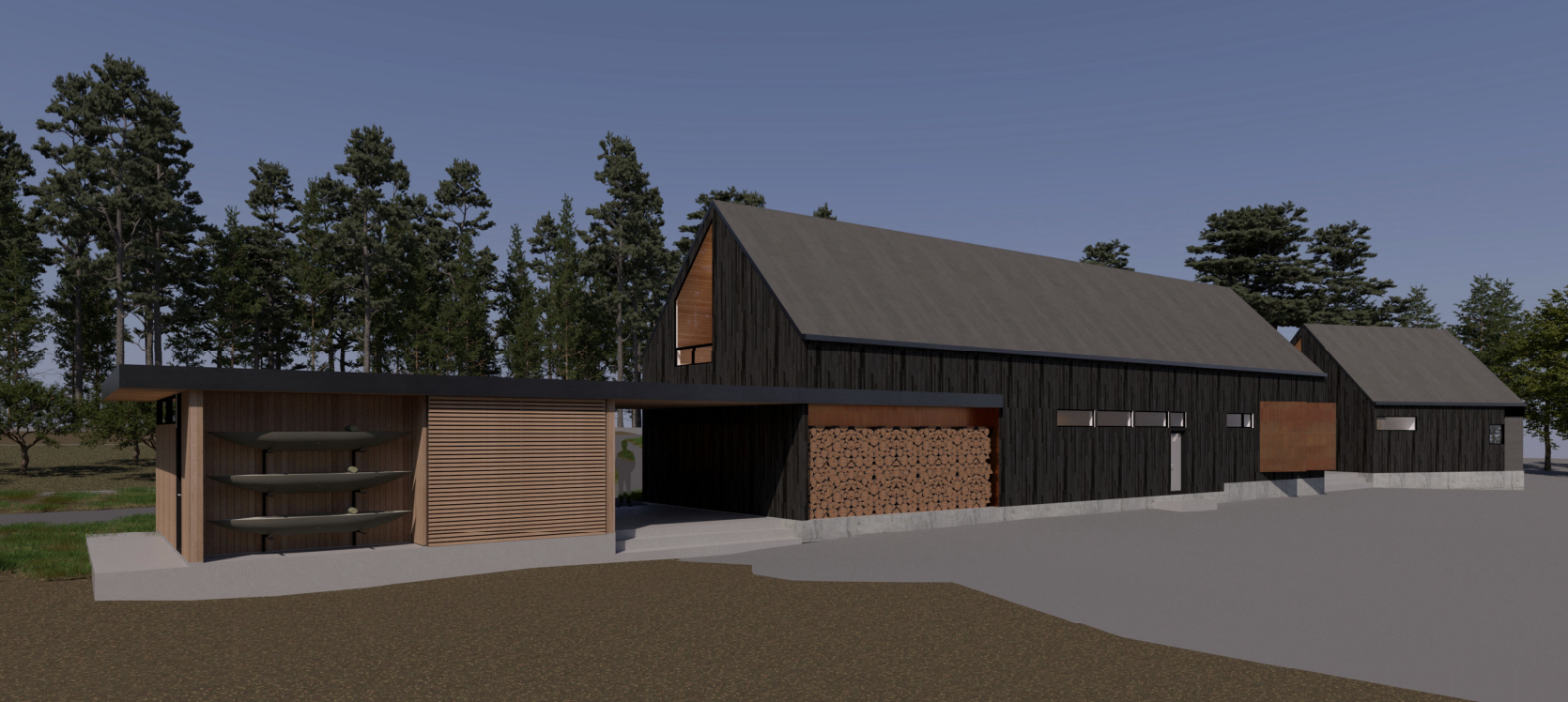
Drawing the Longhouse
The longhouse came first.
We bought the land in late November. By January, we were already scheming about what to draw - not the house we'd live in, but the building beside it. The longhouse. The place we work and the place we gather. The one with the garage and the wine storage and the workshop and the music studio and the event space. A place for friends to sleep when they came up for the weekend. The building that will hold all the things a creative life is made of.
We hadn't called it a longhouse yet. That word came later, and not from us.
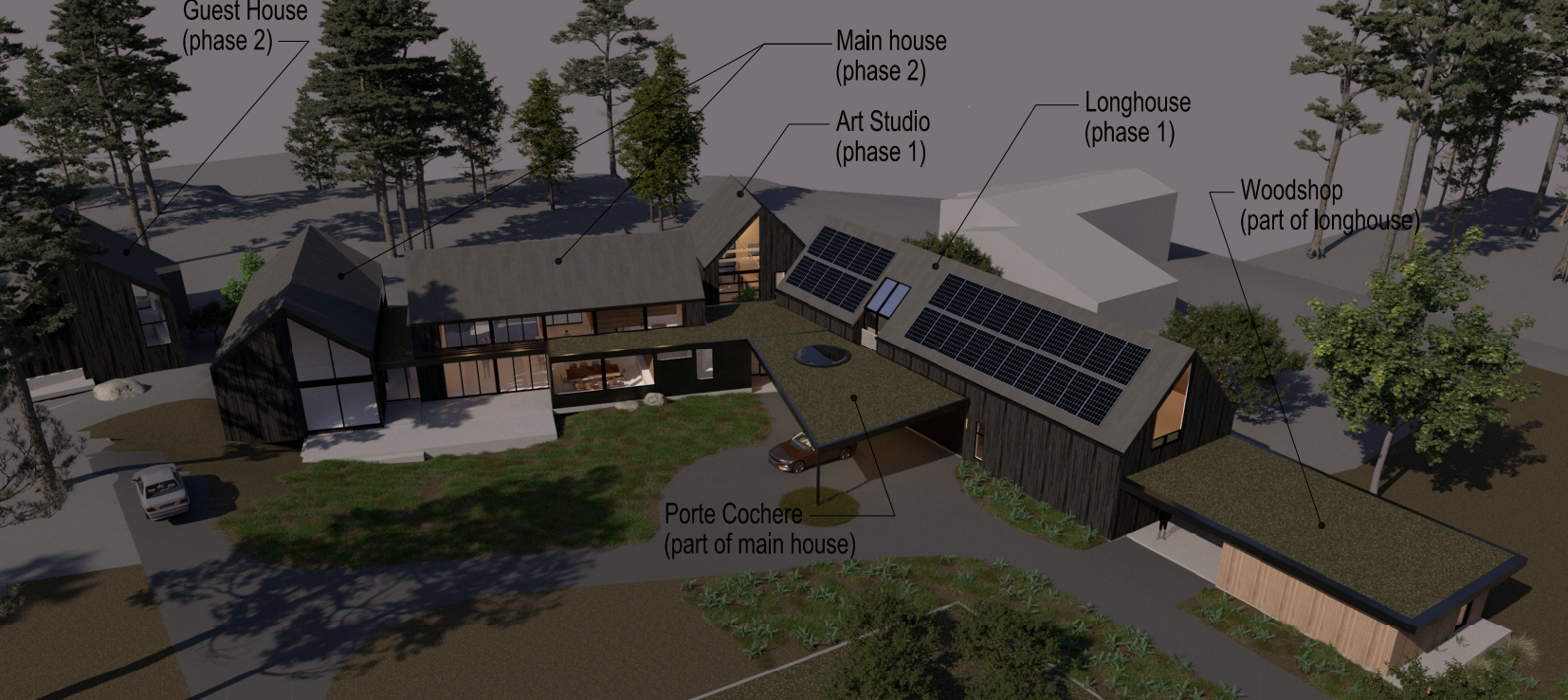
We knew, walking the property in those first weeks, what we needed. Five structures - a main house for the two of us, a guest cottage tucked into the trees, an art studio out front where the light is best, the longhouse, and over time some smaller buildings still finding their shape. We knew the purpose of each. What we didn't know was how to draw it.
So we called the architect.
He had transformed our 1905 craftsman in the city - a restoration and a contemporary addition that taught us what it feels like to work with someone who understands the bones of a place before changing anything. He knew us. He knew the way Alex thinks about systems and the way I think about design. He knew which arguments we'd have before we had them.
This project was entirely different. The craftsman was already a building - we were in conversation with what existed. This was a clearing in the woods. There was nothing to restore, nothing to honor except the land itself: the high bluff, the way the light moved through the trees.
We told him what each building needed to do. We talked about Scandinavian design - the warmth of it, the restraint, the clean lines and timeless design, the way siding on countryside barns can hold a hundred years of weather without ever feeling old. We talked about how we wanted to live here: long dinners, music after dark, friends staying over, projects that take more than one weekend, wine cellars and wood shops and the kind of garage that's also somehow a room. He listened. He went away. He came back with drawings.
And one of those drawings had a long, east-west building running parallel to the access road — garage at one end, event space and workshop sitting above, with everything else tucked in between. He had given it a name on the title block.
Longhouse.
It was the right word. We knew it as soon as we read it.
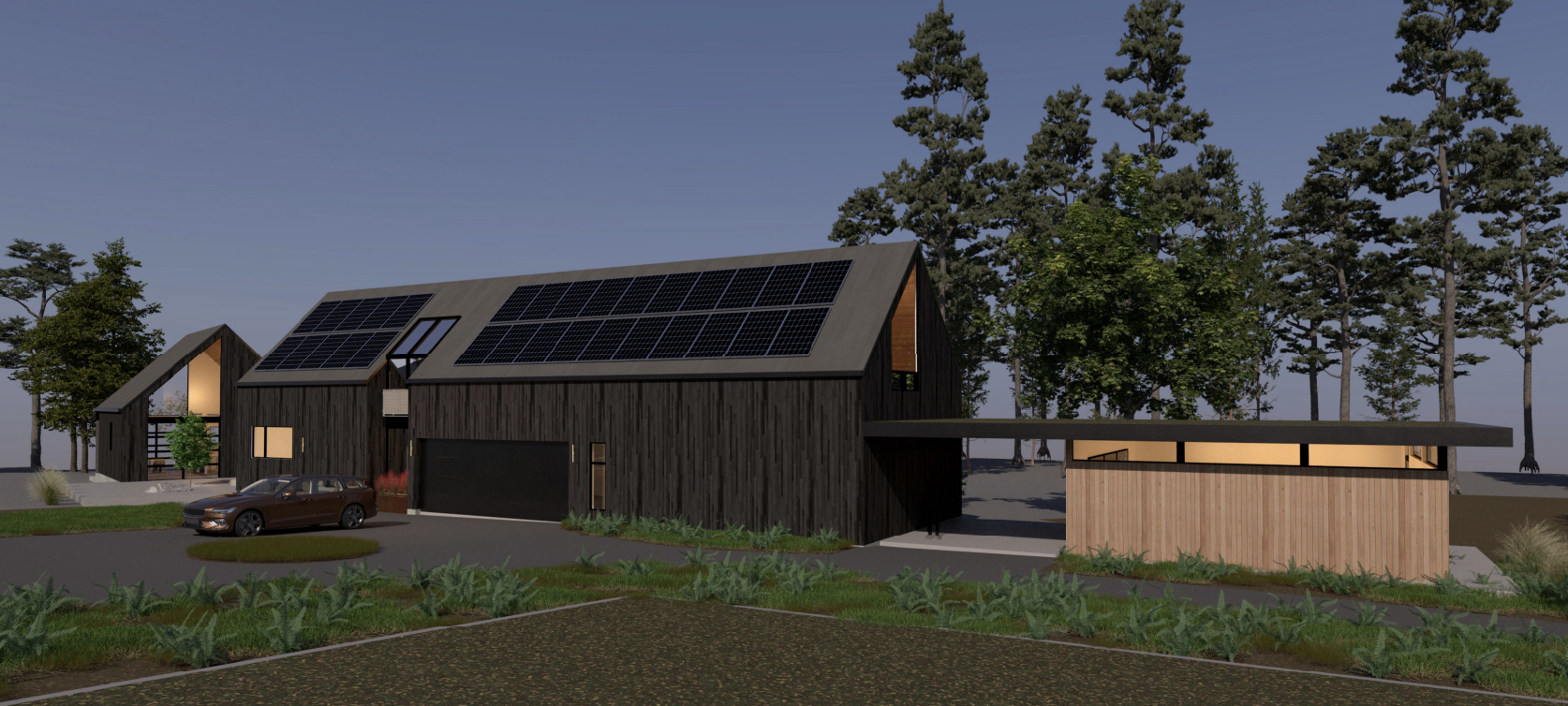
A longhouse is not a style. It's a posture. It says: we plan to gather here. We plan to make things here. We plan to leave room for the messy, beautiful, full-volume life that doesn't fit inside a house. The form is honest about its job. It's long because the program is long — many rooms, many uses, all under one roof.
The longhouse and the art studio are Phase One. The main house — the place we'll actually sleep — comes later. We've thought about that order more than once, and we always land in the same place: the buildings where we gather and make things matter to us most. Build the life first. The bedroom can wait.
We will spend time in these drawings. We will move windows. We will change the entry. We will argue about the workshop floor. We have submitted permit sets and now we wait. We have learned — slowly, expensively — that drawing a building is mostly the practice of being told no by reality and finding a better yes.
The longhouse is not built. The longhouse has barely begun. But the longhouse is real in the way a thing becomes real when you have lived inside it in your imagination long enough that you can already tell which floorboard will creak.
We will break ground when we break ground. Permits, weather, money, and the patience of contractors will decide the date. In the meantime, we draw, we revise, we walk the site at dusk and stand where the wine storage will go and pretend to choose a bottle from a cellar that does not yet exist.
It turns out you can move in long before you build.